Golf Balls Buying Guide
Golf ball technology has improved so enormously in recent years that finding the
right ball for your game can have as much impact as picking the right club. Each
are packed with various degrees of performance and technology developments, and
can greatly assist or detract from a golfer's play. However, due to these technological
advances and the huge variety of ball types available, choosing the right ball can
be a confusing task. Use our buying guide to learn about the different types of
golf balls before choosing the ball type that best matches your game. As is the
case with your clubs, it's important to find the right ones that fit you, no matter
what other people recommend.
Golf Ball Types
Golf balls are designed to create distance, feel and spin and are divided into two
main categories: distance, and performance balls. Distance balls are designed to
provide maximum distance while producing relatively little backspin, giving the
player extra length off the tee. Performance balls offer more spin, fly with a higher
trajectory, and are therefore suited to players with a lower handicap who are looking
for more control and don't mind sacrificing a little distance. Other ball variations
include compromise balls, which combine distance with increased feel, and low-compression
balls that provide more spin than normal distance balls, but without losing distance
when driving due to their lower-compression core and soft cover.
Practice balls are made of a spongy material, and when hit at full swing will only
travel around 10 yards. These reduced-flight balls are very useful for simulating
the spin that's put on the ball during play and are excellent substitutes when not
practicing on driving ranges.
Golf Ball Construction
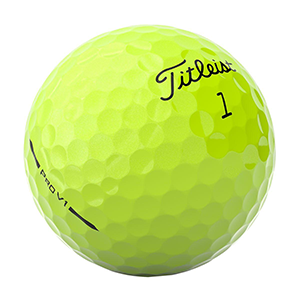
Golf balls are made with dimples or indentations on the surface of the ball that
help create lift and fight drag, keeping the ball airborne for longer They do this
by creating two layers of air flowing round the ball, with the outer layer going
faster than the inner layer. This causes turbulence, reducing the drag and allowing
the ball to travel in the sir for greater distances than a smooth ball. There are
between 300 - 500 dimples on any one golf ball.
There are four basic choices in ball design: one-piece, two-piece, three-piece,
and multi-layer.
One-piece golf balls are made for the scratch golfer, and although very durable
are almost never used as proper playing balls. Sometimes used as driving balls,
they are made of one solid piece of plastic called 'surlyn' with the dimples moulded
in, and are very cheap to buy.
Two-piece golf balls are hard balls made with a solid core enclosed in surlyn or
other similar speciality plastic. They combine the durability of a one-piece ball
with increased distance and are by far the most popular golf ball used by average
golfers today. High handicap players or beginners should opt for a two-piece ball
due to its durability, affordability, and distance, although there isn't as much
control as there is in a softer ball.
Three-piece golf balls have a centre made from either solid rubber or liquid which
is then separated from the cover with an additional layer of material. This gives
the ball a softer feel which provides enhanced spin, but with decreased distance
and durability, a good choice for skilful golfers. Average players with a faster
swing speed can also opt for a softer, three-piece ball, bearing in mind they may
be slightly more difficult to control.
Multi-layer golf balls are made with a soft cover separated by several thin layers
made from a variety of materials, interacting with the club face on impact to produce
the longest hitting, softest feeling golf ball on the market. Offering a good balance
of distance, durability, spin and feel, multi-layer golf balls aim to provide the
ultimate fit for every shot. Multi-layered balls are best suited to low handicap
players, since their fast swing means they won't feel the effect of the loss of
distance when compared with a two-piece ball.